20 EPIC Things to Do in Southern Utah
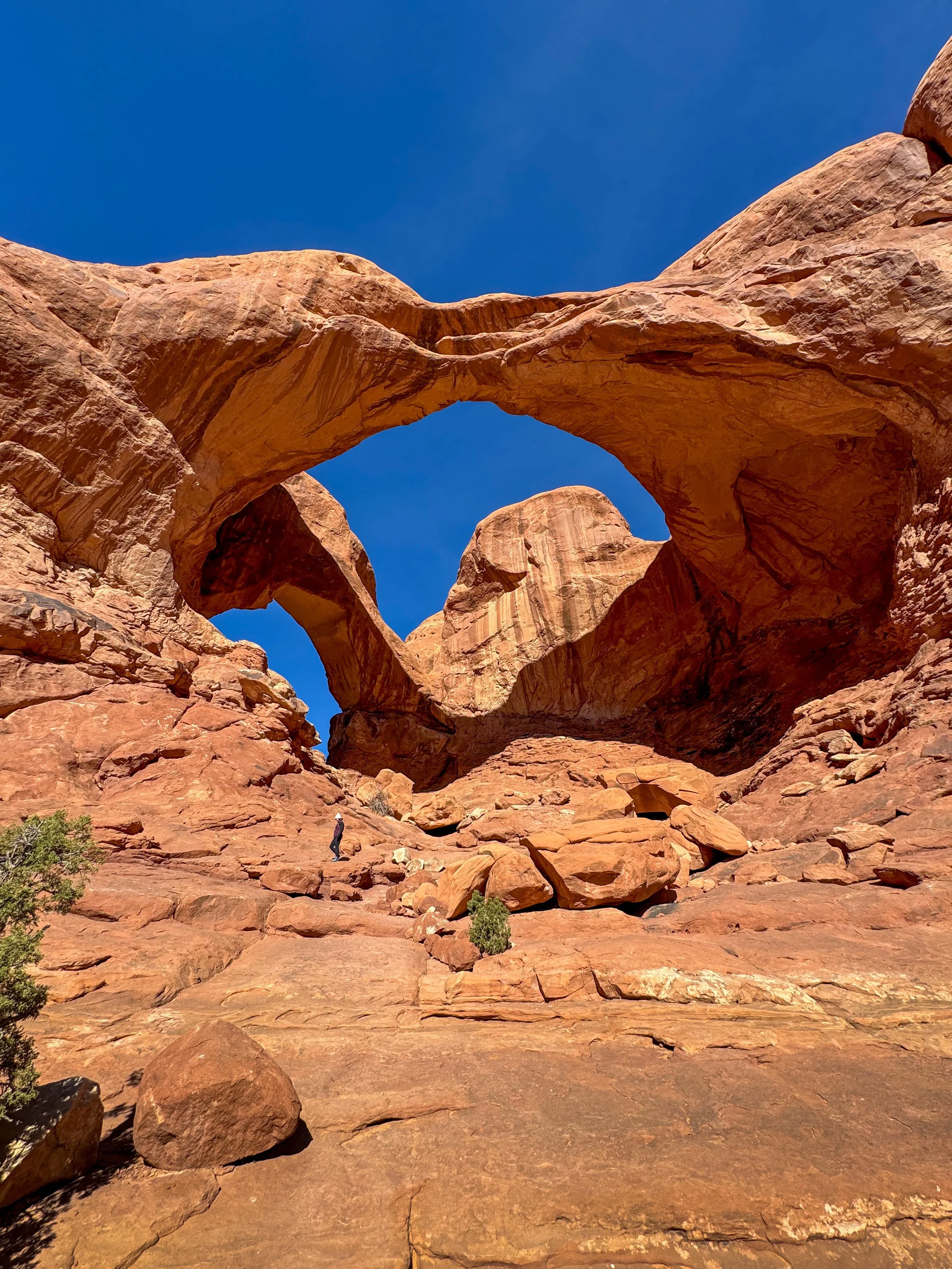
Southern Utah is a red-rock paradise, filled with towering cliffs, slot canyons, hoodoos, and sweeping desert views. If you are looking to visit somewhere with epic hikes, scenic viewpoints, and breathtaking drives - southern Utah is for you!
This blog post will go over 20 of the BEST things to see and do in southern Utah, from iconic hikes to hidden gems, with tips on how to visit, when to go, and more.
General Tips:
National Park vs. State Park Fees
National Parks almost always require an entrance fee!
You can pay a daily entrance fee for a single park, or use broader passes. The most common pass is the America the Beautiful – National Parks and Federal Recreational Lands Pass, which covers entrance or day‑use fees at 2,000+ federal recreation sites (including national parks, monuments, forests, wildlife refuges, BLM lands, etc.). These can be purchased online or at the park entrances.
2026 updates: Starting January 1st, 2026, America the Beautiful passes cost $80 for U.S. residents, but non‑U.S. residents pay $250 for an annual pass, and nonresidents without a pass will pay an additional $100 per person surcharge at 11 major parks in addition to regular fees.
State parks often require their own fee as they are managed by different entities than the national parks.
Fees vary widely: Many state parks charge per‑vehicle or per‑person day fees, and others are free; the exact cost depends on the state and sometimes even the individual park. You can pay at park kiosks or entrance stands.
State passes: Many states offer their own annual passes that provide unlimited access to most parks in that state. An annual pass typically pays for itself if you use it to visit 3+ parks in one trip.
Federal/national park passes do not normally work at state parks, and state park passes generally aren’t accepted at national parks (though a few special joint federal/state sites may offer exceptions).
Resident discounts: Many states offer lower fees for in‑state residents compared to out‑of‑state visitors.
Safety
Utah is a rugged desert - even when visiting national parks or hiking near towns, you must ALWAYS be prepared with water, sun protection, and safety gear when hiking. Check out the 10 recommended essentials for hiking here.
Leave No Trace
How would you feel arriving to a beautiful outdoor destination only to find trash, graffiti, etc. ruining the view and experience? Please respect these outdoor places when visiting them! Pack out ALL trash, including food scraps, do not feed wildlife, stay on designated trails, and respect posted rules. Do your part to keep these places stunning and accessible for years to come!
Trail and Road Conditions
For the most part, every place in this post is accessible to most vehicles. That being said, if there has been recent rain, it is always possible roads or trails could be rough or impassable. Always try to research spots prior to going for the most up to date conditions. We do this by using reviews on AllTrails or you can talk to national or state park staff if available.
As a disclaimer: this blog post may contain affiliate links. This means we get a small commission if you purchase through the links - no extra cost to you! This is one way we can keep producing free guides to help you with your travels!
Top 20 Things to do in Southern Utah
1. Hike Angels Landing
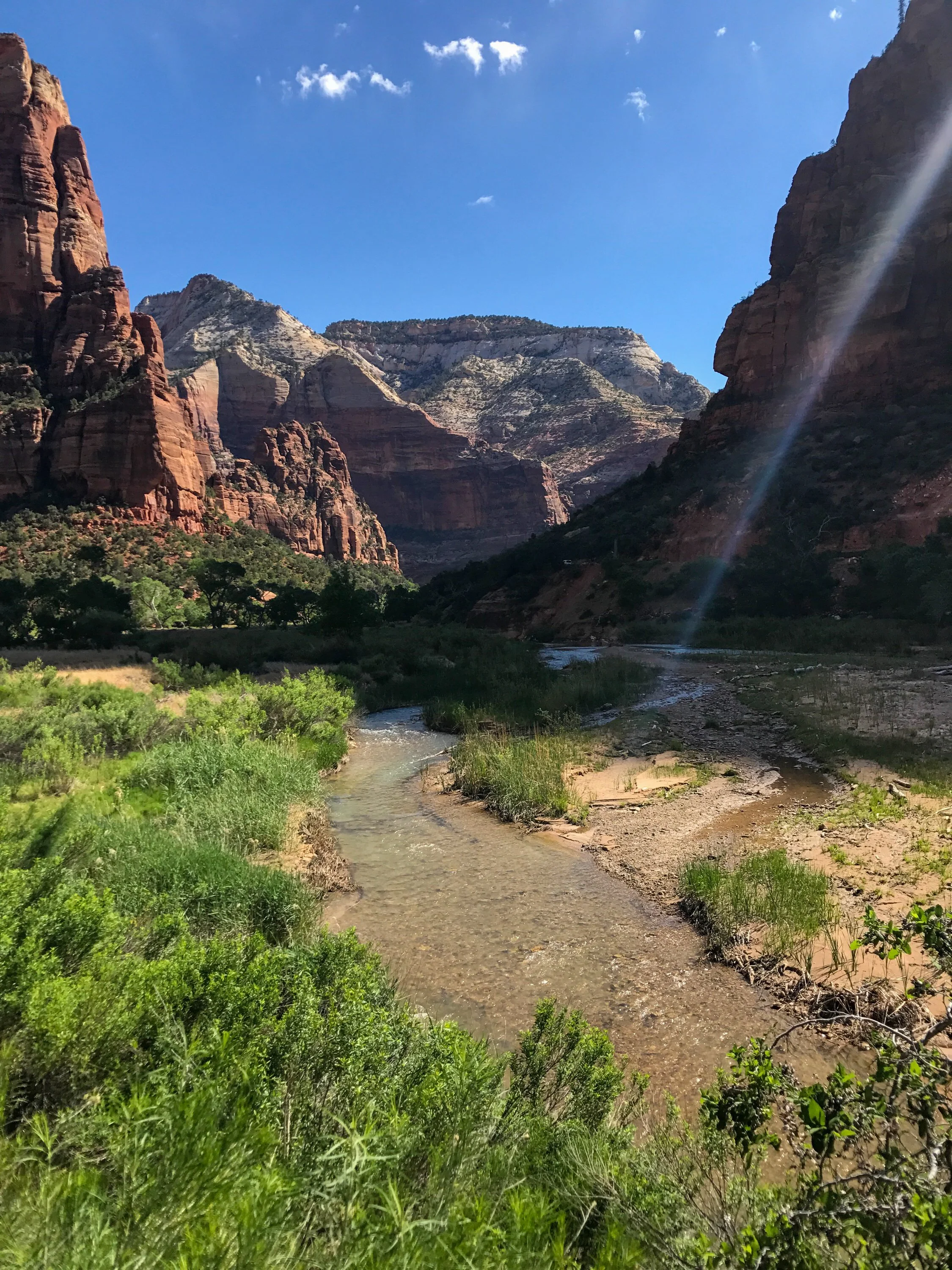
Summary: This strenuous hike is probably Utah’s most well-known adventure. Angels Landing is a short but intense hike in Zion National Park, famous for its steep switchbacks, sheer drop-offs, and chain-assisted final ridge. The reward is a heart-pounding climb and one of the most iconic panoramic views in the southwest.
How to Visit: Take the shuttle from the visitor’s center to Angels Landing Trailhead. Permit needed.
Best Time: Spring or Fall, early morning to avoid heat and crowds.
Tips: Wear gloves for chains along the final ridge; start at sunrise for dramatic lighting.
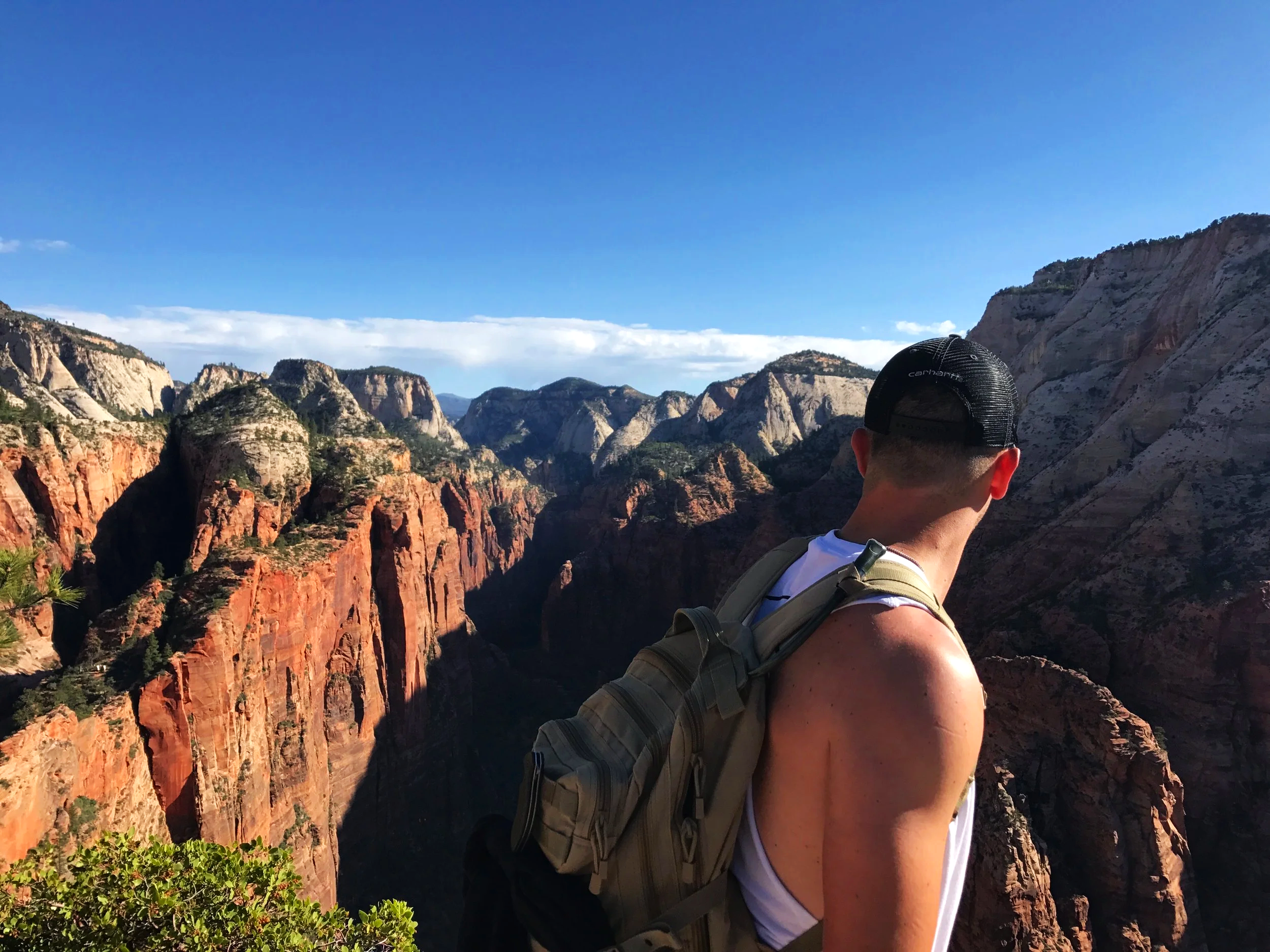
A view at the top of Angels Landing trail in Zion National Park
2. Hike The Narrows
Summary: Where else can you hike through a slot canyon in a river?! The Narrows is a stunning river hike in Zion National Park where you wade through the Virgin River between towering canyon walls that narrow to just a few feet wide. It’s a serene, immersive adventure that feels equal parts peaceful and awe-inspiring as water, stone, and light surround you.
How to Visit: Take the shuttle from the visitor’s center; hike from the Riverside Walk trailhead.
Best Time: Late spring or early fall (river conditions safer).
Tips: Check water flow for flash flood risk; never hike if rain is forecasted! Prepare for cold water - gear can be rented in Springdale.
3. Explore Peek-a-Boo & Spooky Gulch
Summary: Speaking of slot canyons - these are two of the most fun and otherworldly slot canyons in Utah! Located in Grand Staircase–Escalante, both are known for tight squeezes, twisting sandstone walls, and a playful sense of adventure. Since these are located outside of a national park, they are often less crowded. You can visit both along one trail.
How to Visit: Located off Hole-in-the-Rock Road near Escalante, Utah. No permits needed.
Best Time: Sunrise or late afternoon for dramatic shadows. Visit in the spring or fall for mild temperatures and less risk of flash floods.
Tips: Small parking lot; start early to avoid crowds. Do not attempt if rain is in the forecast! Wear minimal gear, the slots are often too narrow to fit in with large backpacks.
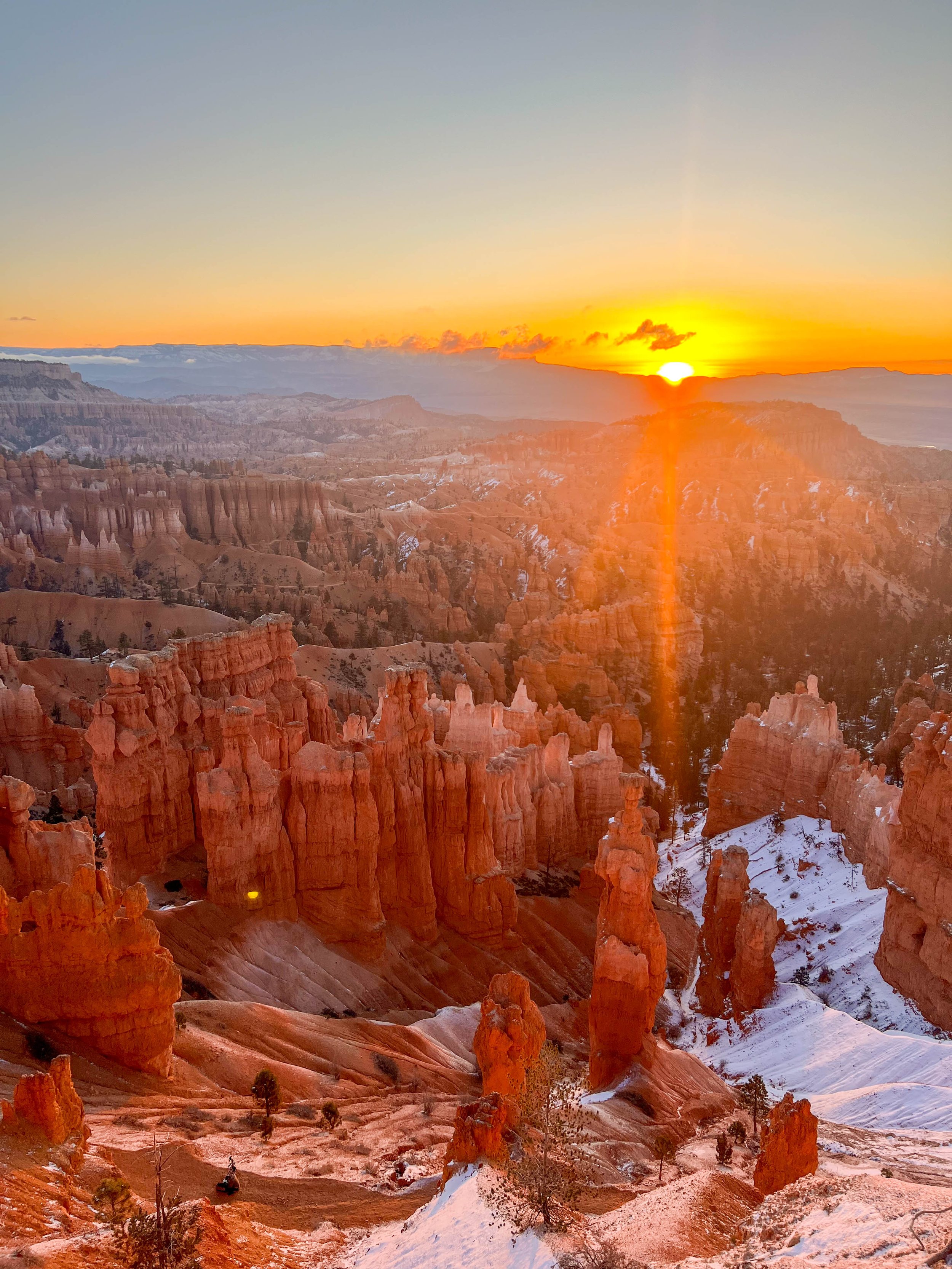
4. Hike Navajo to Queen’s Garden Loop
Summary: The Navajo to Queen’s Garden Loop is one of Bryce Canyon National Park's most iconic hikes, descending through towering hoodoos and narrow switchbacks before winding through a fairy-tale landscape of spires and arches. This moderate loop delivers nonstop views, is the perfect introduction to Bryce’s otherworldly terrain, and is the trail to do if you want to see the iconic Wall Street.
How to Visit: Trail starts at Sunrise Point. Shuttle is available during the busy months.
Best Time: Great year-round; consider spring or fall for less crowds.
Tips: Wear layers. Hoodoos are fragile - stay on trails. Drink a lot of water to combat altitude sickness.
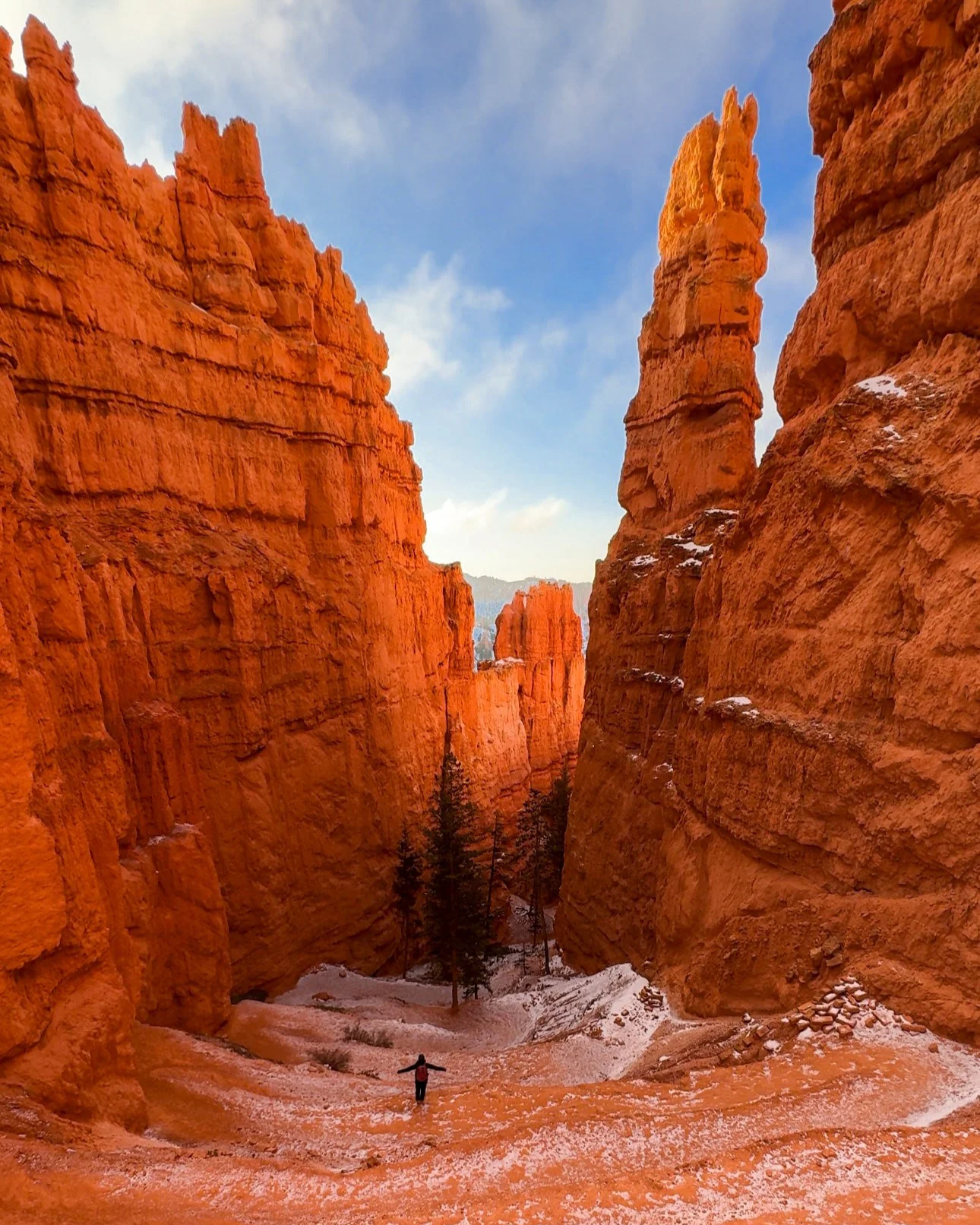
Wall Street in Bryce Canyon National Park
5. Hike Peekaboo Loop
Summary: Speaking of epic hikes in Bryce Canyon National Park…this loop is one of our all time favorite loop hikes in the USA! This is a scenic, moderate hike that winds through dense clusters of hoodoos, arches, and narrow passages deep within the amphitheater. It is WAY less crowded than the main trails and offers an up-close, immersive experience of Bryce’s dramatic rock formations.
How to Visit: Trailhead at Bryce Amphitheater. Shuttle is available during the busy months.
Best Time: Spring or fall.
Tips: Bring plenty of water; some steep switchbacks. Plan to wear microspikes if visiting during the snowy months.
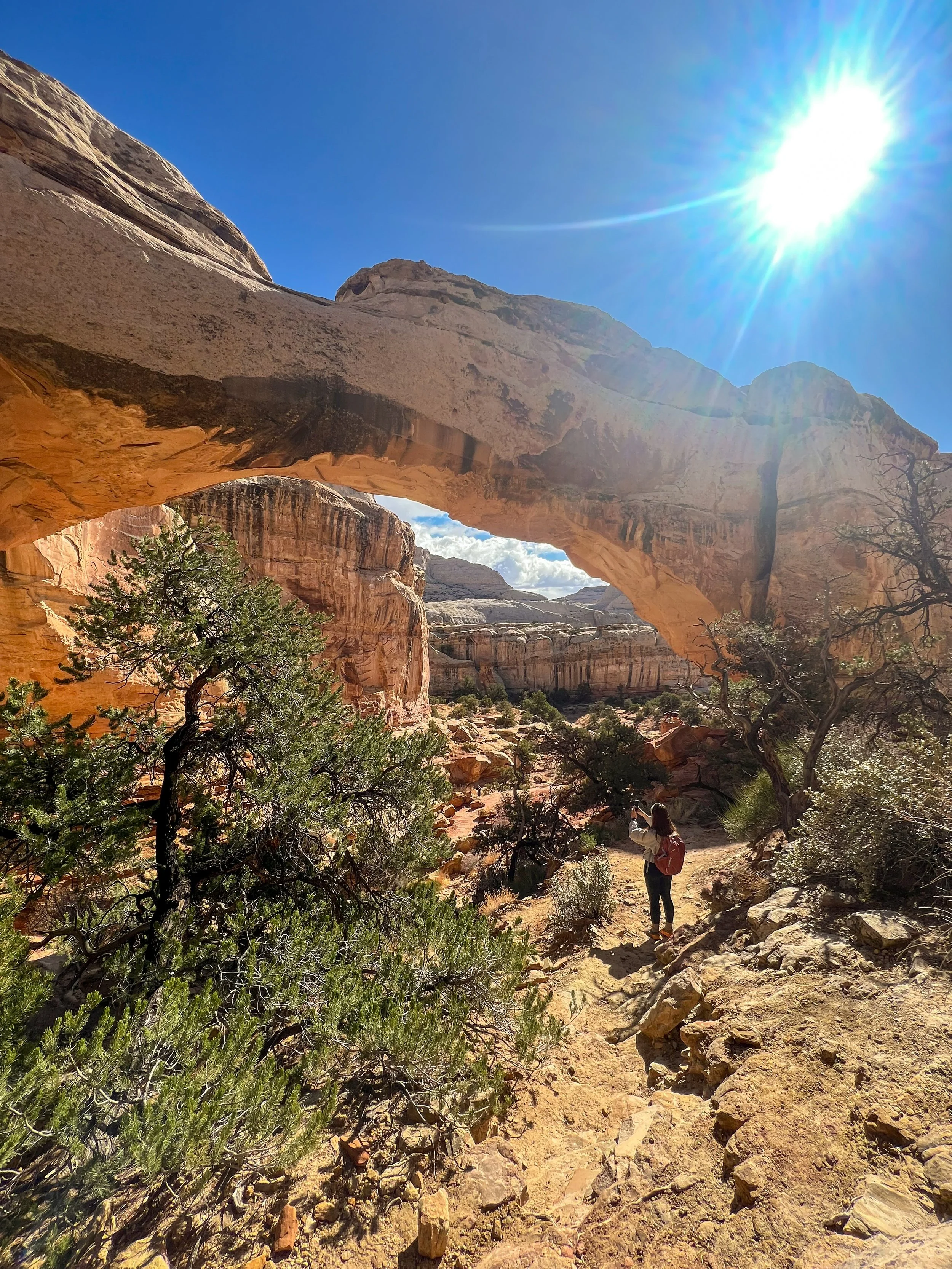
6. See Hickman Bridge
Summary: We love an easy hike with a huge payoff and this hike is exactly that! This 1.5 mile, family-friendly hike in Capitol Reef National Park leads to a massive natural stone arch spanning 133 feet. If you only have time for one hike in Capitol Reef - make it this one.
How to Visit: Trailhead near Fruita; parking lot is small so arrive early.
Best Time: Spring or fall for cooler temperatures.
Tips: Great photography spot; consider hiking up the Rim Overlook Trail after seeing the bridge for insane views of Capitol Reef from above.
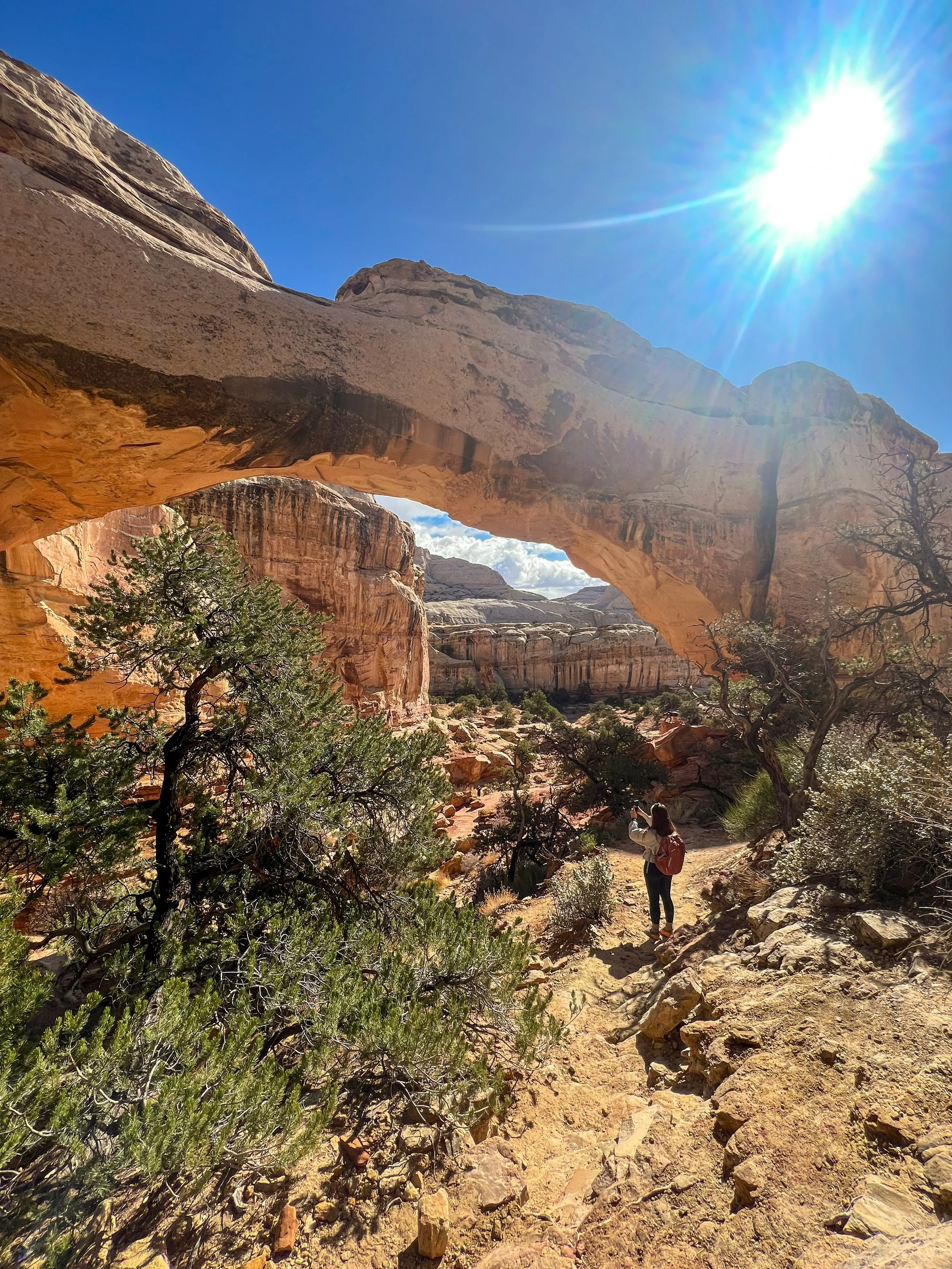
Hickman Bridge in Capitol Reef National Park
7. Grand Wash to Cassidy Arch
Summary: For an epic half-day adventure in Capitol Reef National Park - hike through the Grand Wash to Cassidy Arch! This adventure begins in a wide canyon wash with towering walls before you climb to a dramatic arch perched high above the cliffs. The hike blends easy walking with a rewarding ascent, ending in sweeping views and one of the park’s most iconic landmarks.
How to Visit: Trailhead for Grand Wash is along the scenic park drive; consider downloading the trail map here.
Best Time: Spring or fall.
Tips: Do not attempt if rain is in the forecast. Wear sturdy shoes; you will hike through sand in the wash.
8. Calf Creek Falls
Summary: A waterfall…in the middle of the desert?! Calf Creek Falls is a popular 6-mile round-trip hike in Grand Staircase–Escalante that leads through a scenic canyon to a stunning 126-foot waterfall. The trail offers a mix of desert scenery, shady creekside paths, and a rewarding swim or photo opportunity at the base of the falls.
How to Visit: Trailhead along Highway 12
Best Time: Spring or early summer (water flow higher).
Tips: Bring swim gear if you want to wade at the base. Pack plenty of water! This hike is dog-friendly.
9. Kodachrome Basin State Park
Summary: Kodachrome Basin State Park is a vibrant Utah landscape filled with towering sandstone spires, colorful rock formations, and unique geological features that feel almost otherworldly. This is a great hiking destination for off-the-beaten-path hikes. The best hike in the park is Angel’s Palace, a 1.5 mile loop with great views of the colorful rock formations.
How to Visit: The park is along Highway 12
Best Time: Spring or fall; sunset gives a warm glow on spires.
Tips: Camping is available inside park; dog-friendly trails.
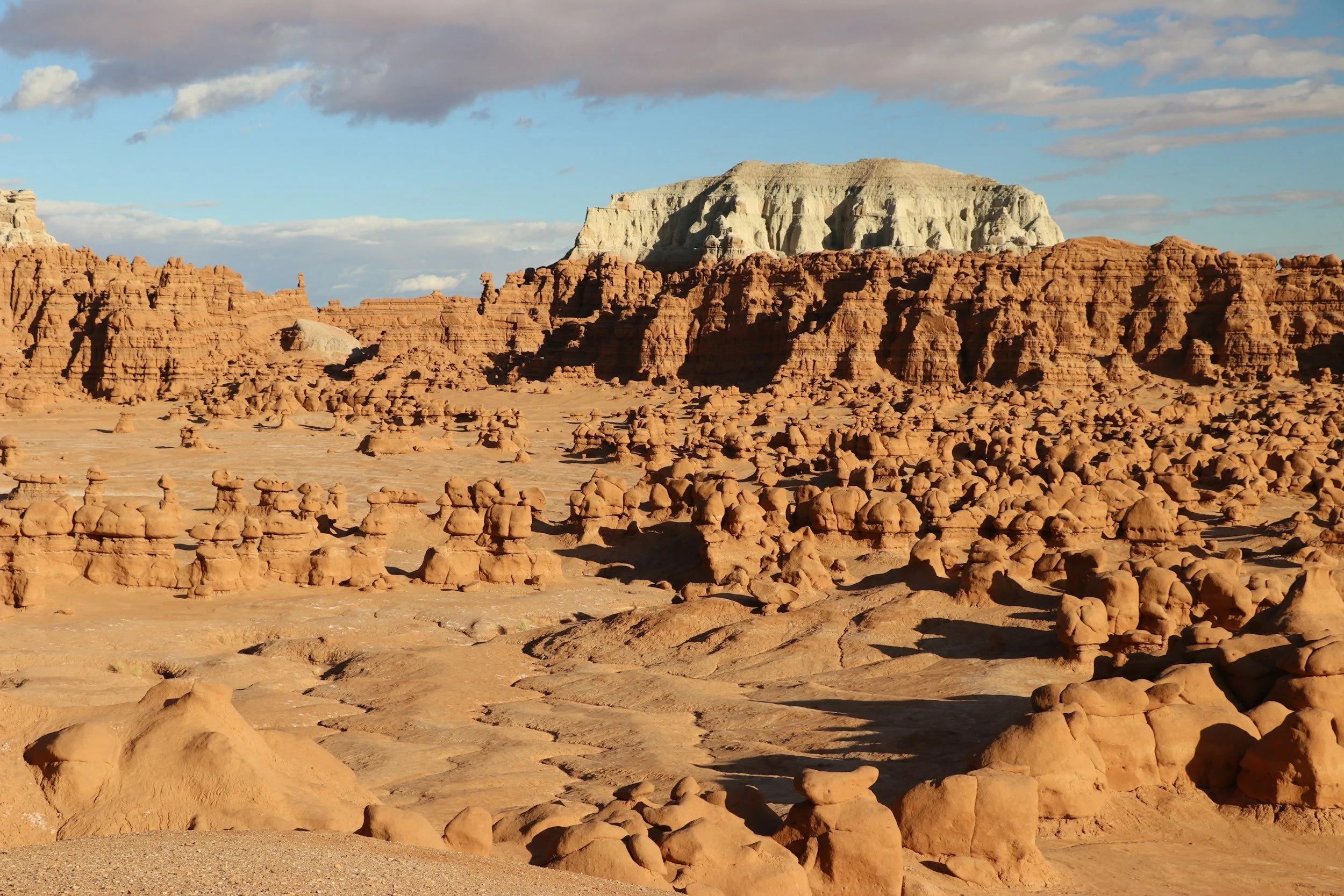
Goblin Valley State Park in Utah
10. Goblin Valley State Park
Summary: Goblin Valley State Park in Utah is a surreal landscape filled with thousands of mushroom-shaped (get your mind out of the gutter) sandstone hoodoos, often called “goblins,” creating a whimsical, otherworldly playground. The best way to explore is just by wandering around! There are some formal trails here if interested but you are allowed to walk around the hoodoos freely.
How to Visit: The park is along highway 24, outside of Hanksville, Utah
Best Time: Sunrise or sunset for best light. Spring or fall to avoid extreme temps.
Tips: No climbing on the hoodoos. Bring water and snacks if you plan to explore for longer than a few hours. This park is dog-friendly!
11. Little Wild Horse Canyon
Summary: For another adventure near Goblin Valley, check out Little Wild Horse Canyon! This is a family-friendly slot canyon in Utah’s San Rafael Swell, famous for its narrow passages, twisting sandstone walls, and photogenic curves.
How to Visit: Trailhead off Sand Flats Road near Goblin Valley
Best Time: Spring or fall for lower risk of flash floods
Tips: Flash floods can occur; avoid hiking if there is rain in the forecast. Shoes with grip recommended.
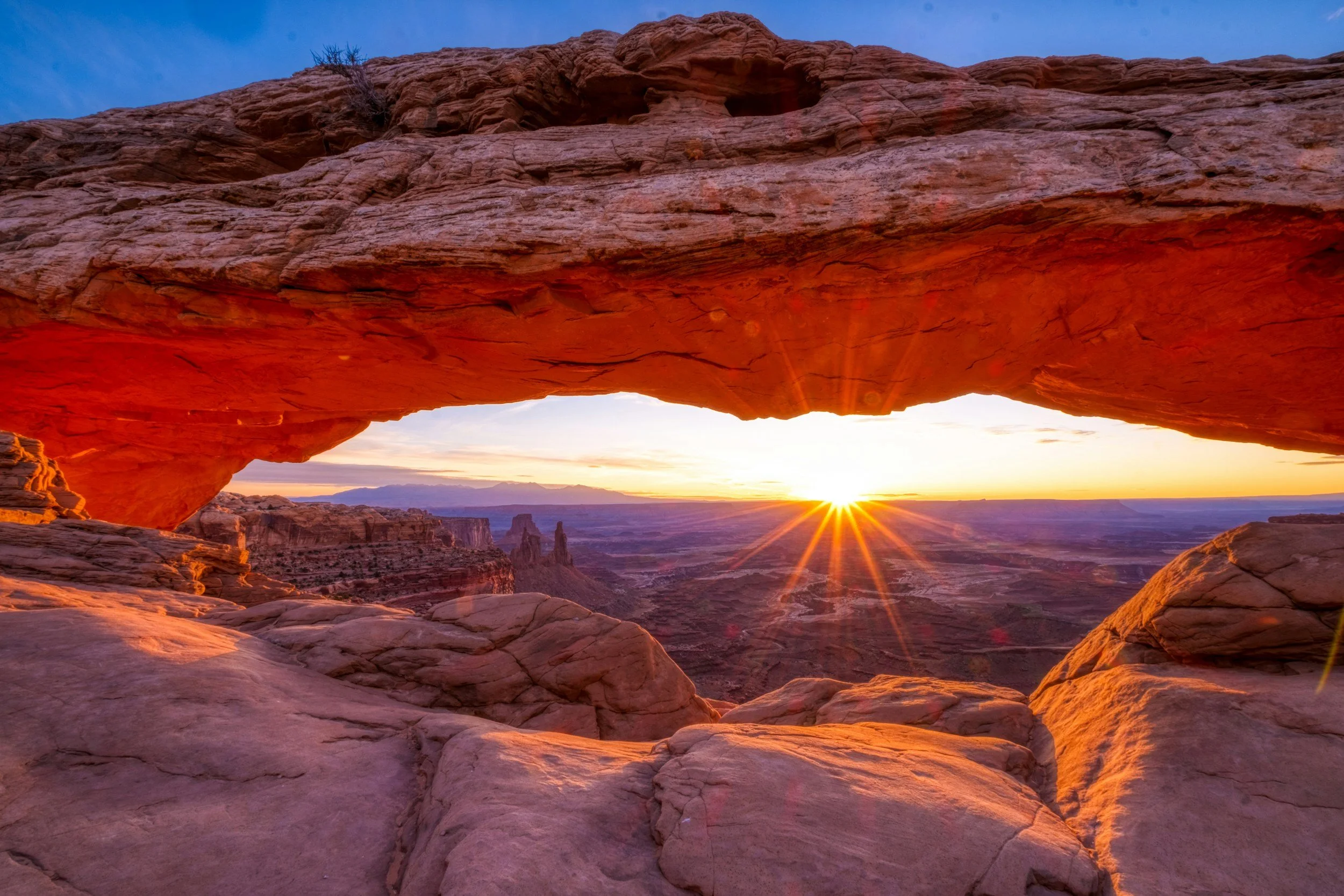
Mesa Arch in Canyonlands National Park
12. Mesa Arch
Summary: This is hands down the most iconic sunrise spot in Utah! Mesa Arch in Canyonlands National Park is a short, easy hike leading to a stunning natural arch perched on the edge of a cliff, framing the canyon below. At sunrise, the arch glows with golden light over the dramatic landscape below and if you are lucky, you will catch the sun inside the arch!
How to Visit: Located in Island in the Sky District in Canyonlands National Park
Best Time: Sunrise (photography highlight). Great year round.
Tips: Tripod recommended if shooting photography; arrive early to beat crowds.
13. Long Dong Silver Spire
Summary: Yes you read that correctly :) Talk about an otherworldly destination! Long Dong Silver is a striking 80‑foot sandstone spire rising out of the remote desert badlands near Hanksville, Utah. There is no formal trail or parking lot for this spot but if you can find the roadside pull-off leading to the “parking area”, the walk to the spire is flat and easy.
How to Visit: Off Highway-24, find more information here.
Best Time: Can visit year round
Tips: The drive to the parking area can be a bit sandy, scout the road before driving in to avoid getting stuck. This area is dog-friendly.
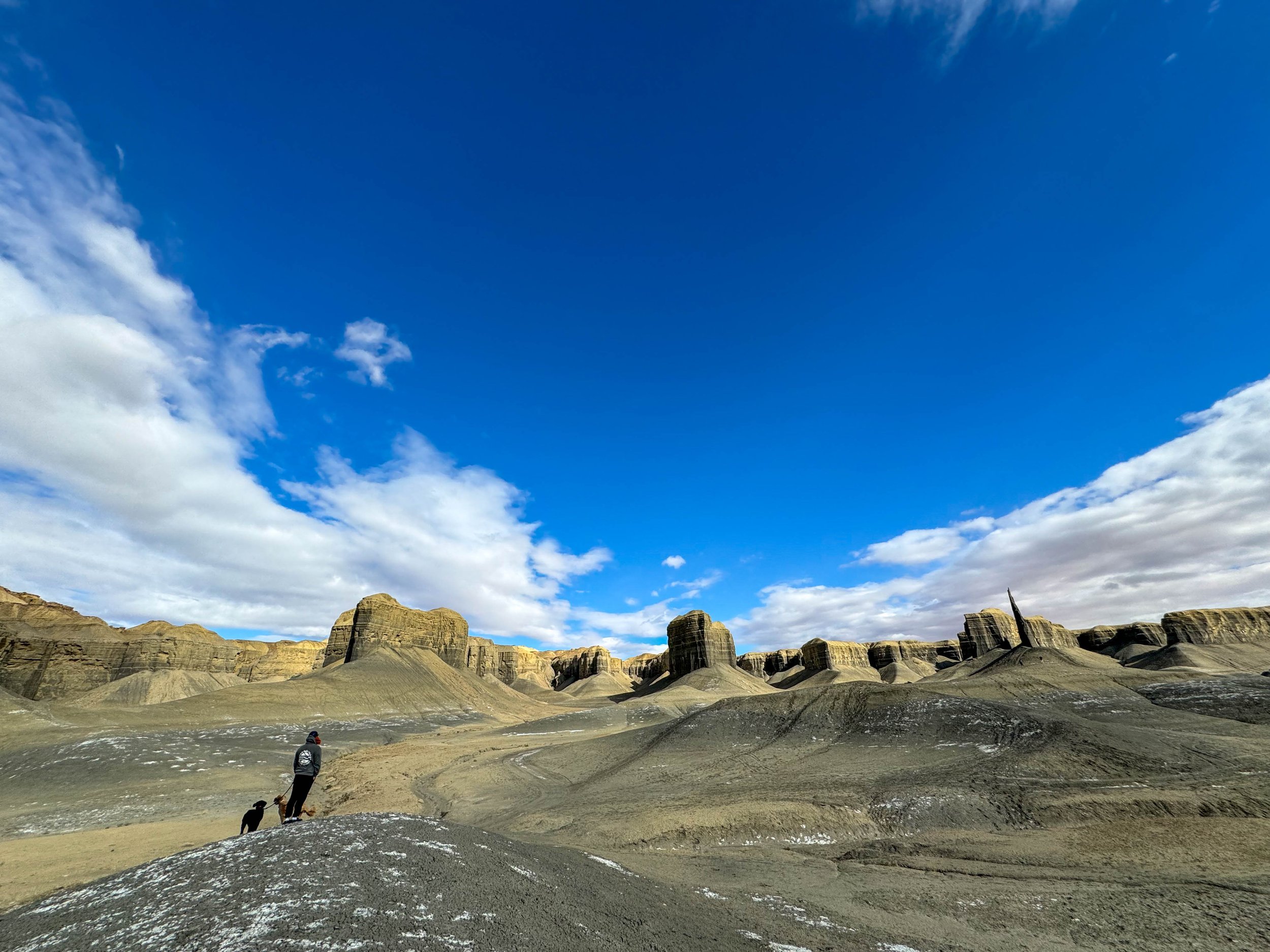
Long Dong Silver Spire and the surrounding area - near Hanksville, Utah
14. Fisher Towers
Summary: Fisher Towers in Utah is a dramatic collection of towering red sandstone spires near Moab, famous for rock climbing. There is only one hike here but it is one of our favorites in Utah! The Fisher Towers Trail is a moderate 4.4-mile round-trip hike that winds around the base of the formations, offering up-close views of the towers and panoramic vistas of the surrounding canyons.
How to Visit: Trailhead off Highway 128; 30-45 minutes outside of Moab
Best Time: Spring or fall. Sunrise and sunset here are stunning!
Tips: Moderate scrambling in some sections. There is a small campground near the trailhead. The trail is dog-friendly but you must be comfortable carrying your dog up a small ladder halfway through the trail.
15. Corona Arch
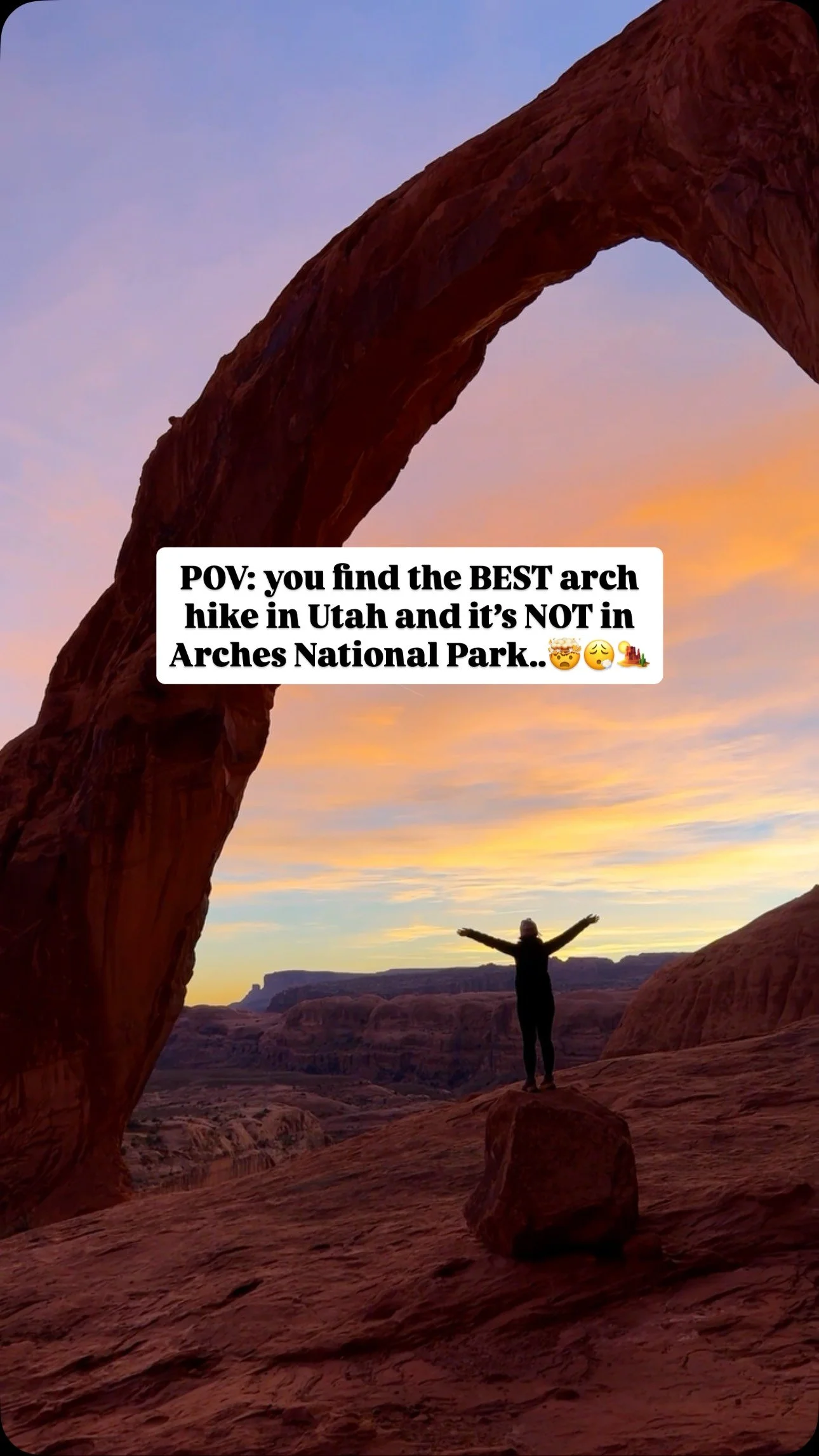
Summary: Dare I say, this is our favorite arch hike in Utah and it is NOT in Arches National Park..but 30 minutes away from there :) Corona Arch is a spectacular natural sandstone arch near Moab, renowned for its massive span and photogenic desert setting. The 3-mile round-trip hike is fairly easy, however, you are hiking across slick rock, with some scrambling.
How to Visit: Trailhead near La Sal Mountain Loop; 30 minutes outside of Moab
Best Time: Late afternoon or sunset for dramatic lighting.
Tips: Download on offline trail map for this one! We use AllTrails to do this. Also bring a headlamp if you plan to hike at sunrise or sunset. This trail is dog-friendly but we did not bring ours due to the scrambling/ladders.
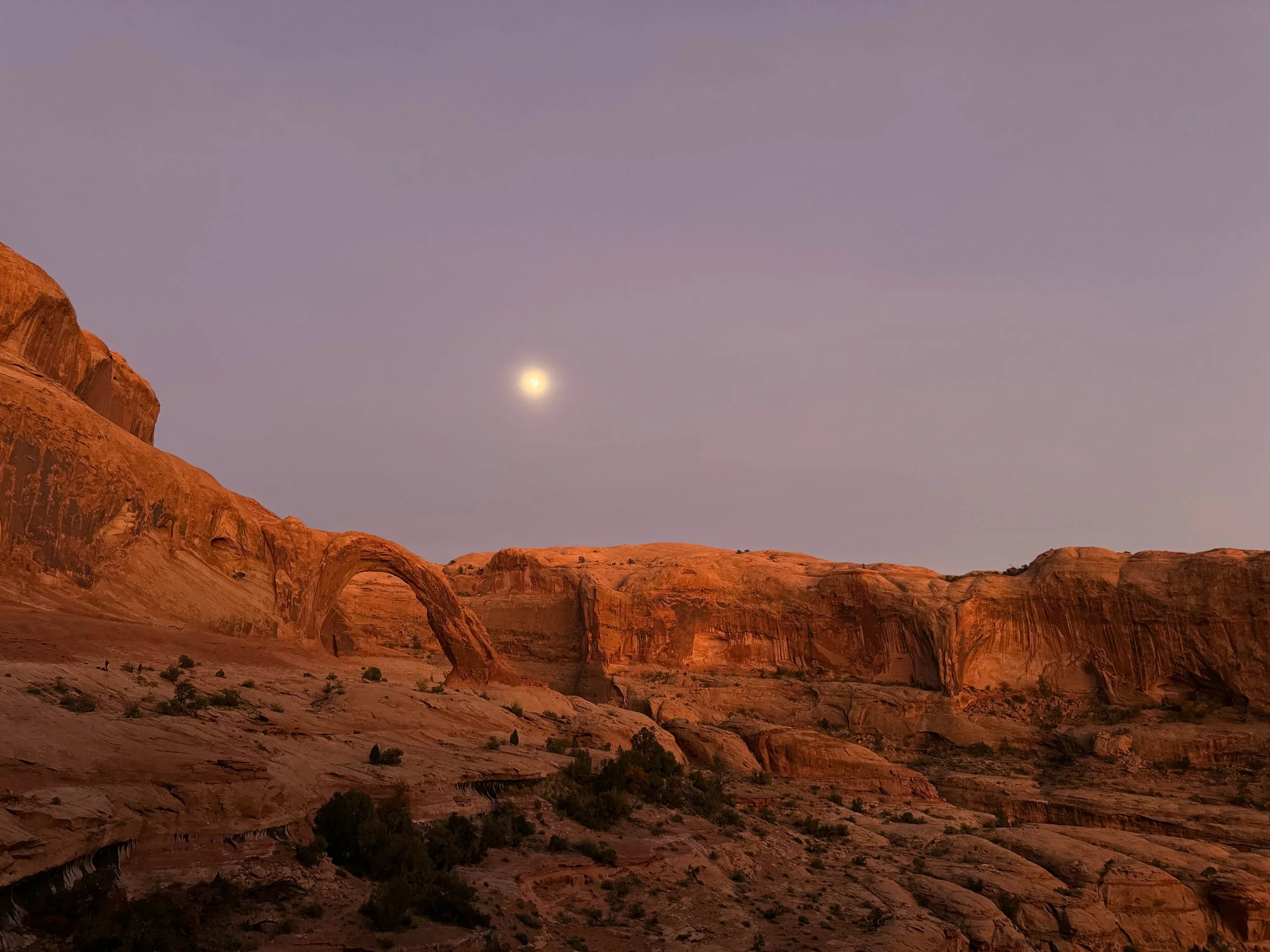
Corona Arch at twilight
16. Factory Butte
Summary: Factory Butte is a striking, isolated mesa in central Utah, known for its barren, colorful badlands and dramatic desert vistas. While there are no official hiking trails, the area is popular for off-road driving, photography, and exploring rugged, otherworldly terrain.
How to Visit: Access via UT-24 near Hanksville; high-clearance vehicle recommended.
Best Time: Accessible year-round
Tips: Remote; cell service limited. Bring water and fuel and know how to self rescue your vehicle if stuck in sand.
17. Bentonite Hills
Summary: If you want to be transported to mars, you are going to want to visit this place! Bentonite Hills in central Utah are colorful, clay-rich badlands with striking bands of red, brown, purple, and green that create an otherworldly landscape. There are no official trails, so visitors explore carefully on BLM land or from nearby roads to admire the unique terrain.
How to Visit: East of Factory Butte; accessible via dirt roads.
Best Time: Sunrise or sunset for vibrant colors.
Tips: Rugged roads; 4x4 recommended. Avoid after rain.
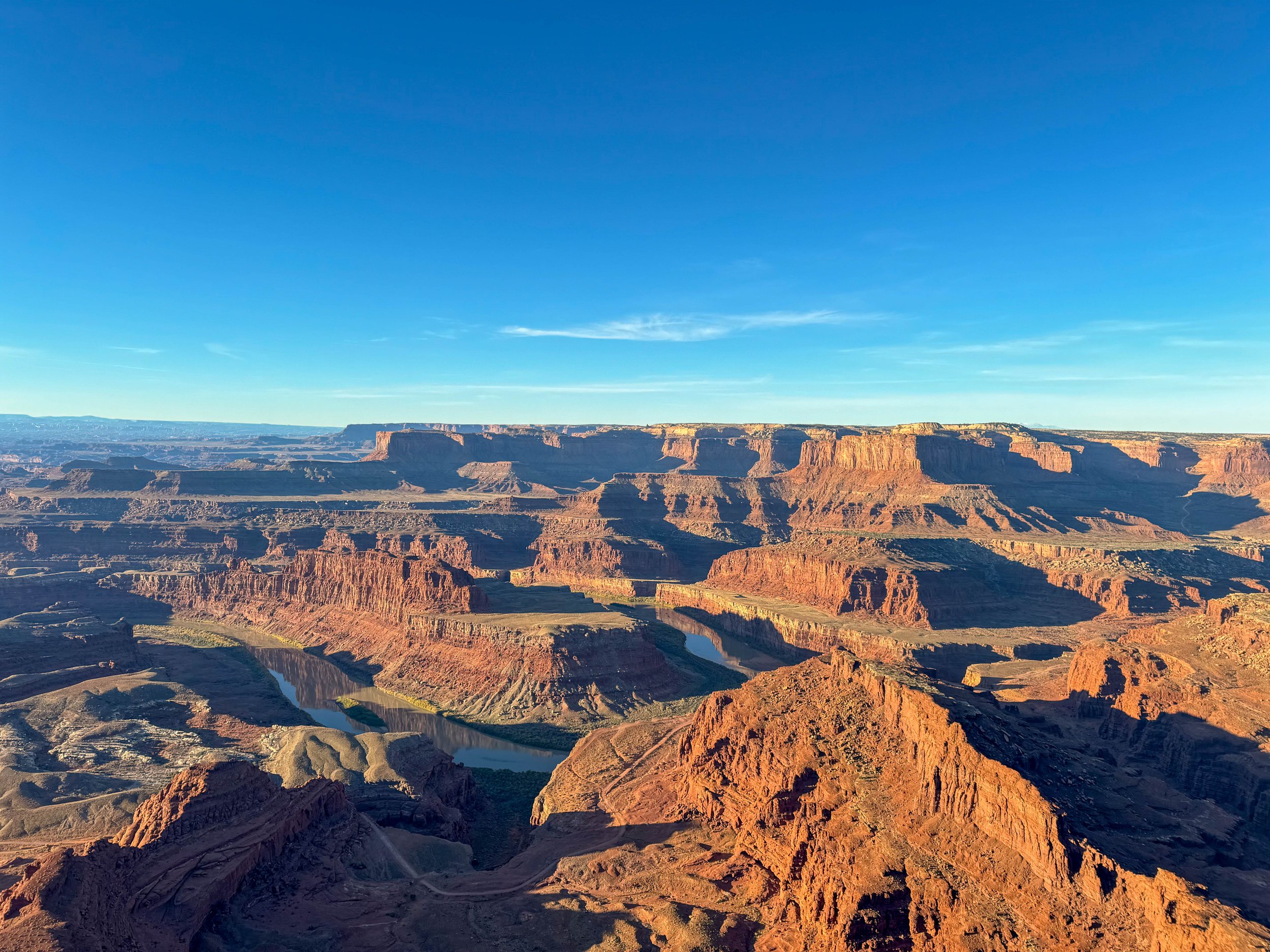
Dead Horse Point State Park near Moab, Utah
18. Dead Horse Point State Park
Summary: If Canyonlands National Park and Grand Canyon National Park had a baby - it would be this state park! Dead Horse Point State Park offers dramatic overlooks of the Colorado River and Canyonlands, providing some of the most iconic desert vistas in the American Southwest. There are a few easy hiking trails here with many accessible overlooks near the parking areas.
How to Visit: 30 minutes from Moab and Canyonlands National Park
Best Time: Sunset for dramatic canyon colors.
Tips: Great for photography. Less crowds than the nearby national parks. The trails here are dog-friendly!
19. Fiery Furnace
Summary: The Fiery Furnace hike in Arches National Park is a unique, labyrinthine adventure through a dense maze of towering sandstone fins and narrow canyons. Because of the unique terrain, accessing the area requires either a guided tour or a permit. The hike is very much a choose-your-own-adventure so distance varies.
How to Visit: See link above for permit info.
Best Time: Spring or Fall.
Tips: Tours and permits book out, plan ahead! Use an app like AllTrails or an SOS device to mark your route to avoid getting lost.
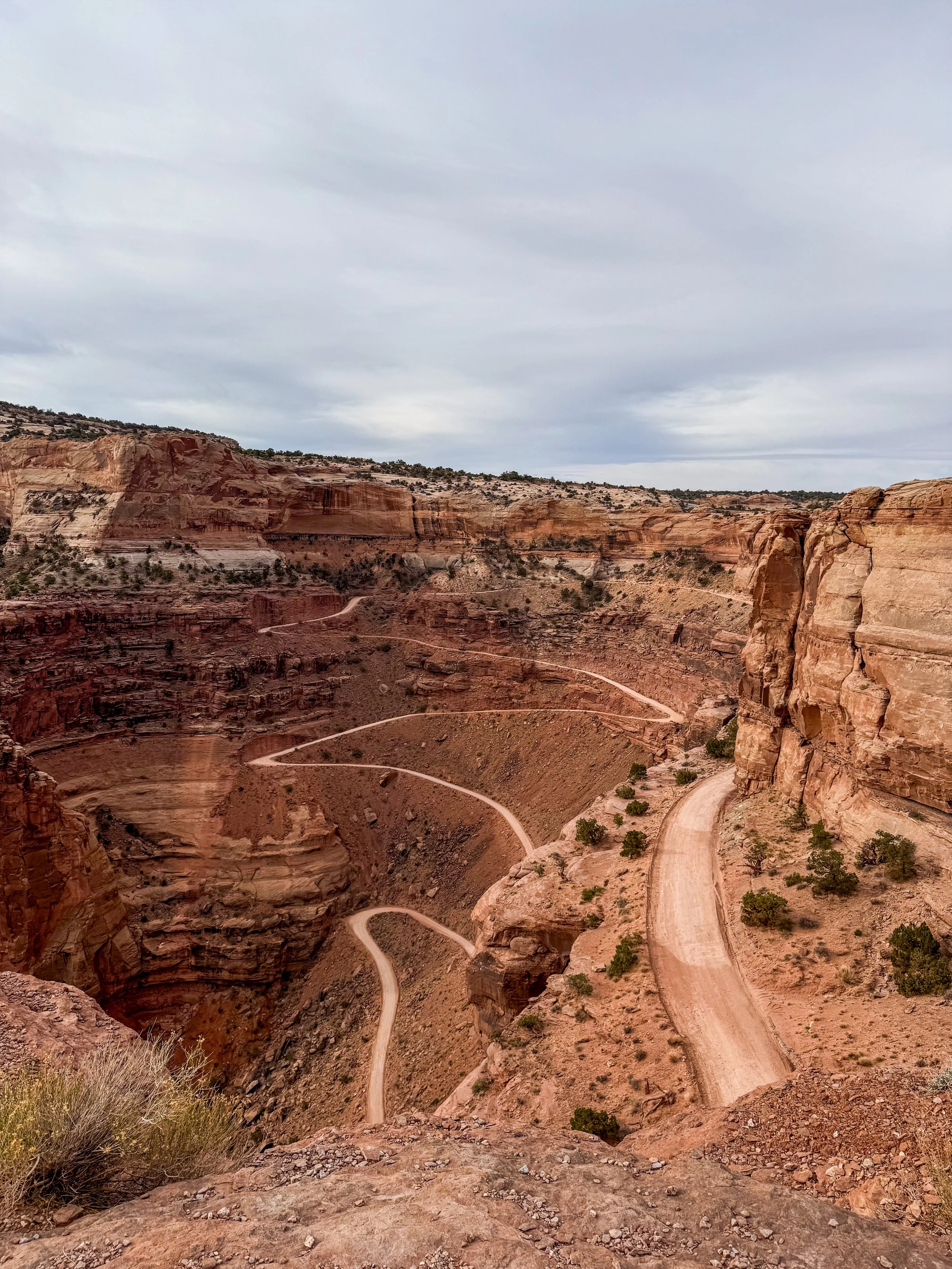
A segment of Shafer Trail in Canyonlands National Park
20. Shafer Trail
Summary: Shafer Trail in Canyonlands National Park is a thrilling, rugged 4×4 driving route and hiking path that descends steep switchbacks from the Island in the Sky mesa to the canyon floor below. The trail offers dramatic panoramic views of deep canyons, towering cliffs, and the surrounding desert landscape, making it a favorite for adventure seekers and photographers alike.
How to Visit: Located in Island in the Sky District in Canyonlands, 4x4 vehicle recommended
Best Time: Spring or fall to avoid rain and muddy roads.
Tips: Only attempt if you have the proper vehicle; guided driving tours available.
Pro Tips for Southern Utah Adventures
Start hikes early to avoid heat and crowds.
Always carry 2–3 liters of water per person for moderate hikes.
Check weather for flash floods in slot canyons and desert washes.
Layer clothing; mornings and evenings can be chilly.
Leave no trace — fragile sandstone and desert flora are easily damaged.
Two-Week Utah Road Trip Route:
This short road trip outlines how to visit all 20 locations in a logical 14-day route. While each destination deserves more time to explore, this itinerary is designed for ambitious travelers who want to see all 20 spots efficiently in one trip.
Day 1–2: Zion
Day 3–4: Bryce + Highway 12
Day 5-6: Escalante / Calf Creek / Kodachrome
Day 7: Capitol Reef
Day 8: Goblin Valley / Factory Butte / Bentonite Hills
Day 9–11: Moab / Arches / Canyonlands
Day 12-14: Optional extra days for Fisher Towers, Corona Arch, and other spots surrounding Moab.
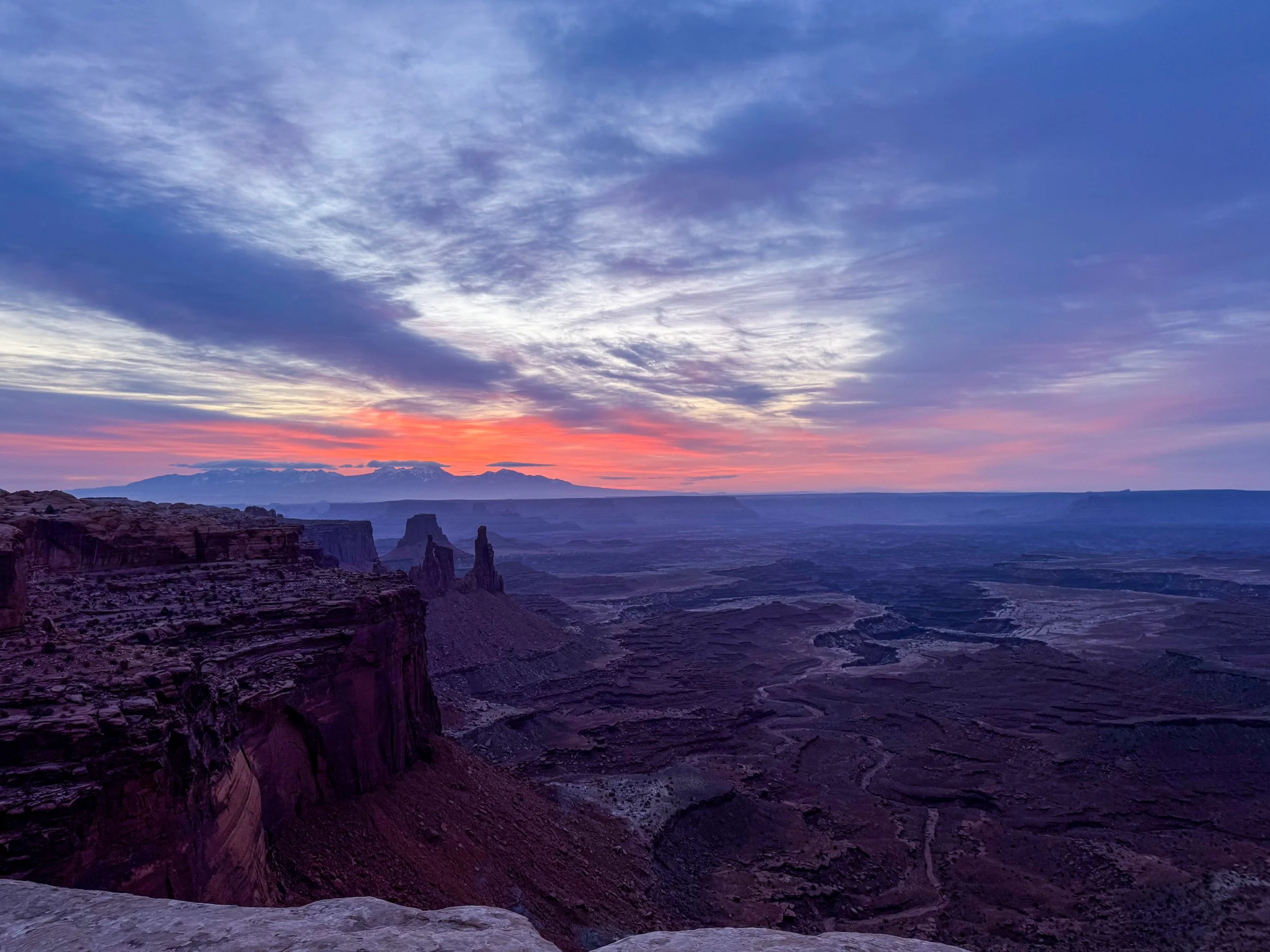
Blue hour at Mesa Arch in Canyonlands National Park
Final Thoughts:
Utah is full of absolutely EPIC spots - to be real, this blog could include thirty more locations. However, out of all the places we have been on our multiple trips to Utah, these are the places we either keep coming back to or have not stopped thinking about since visiting. A trip to explore southern Utah’s otherworldly landscapes needs to be on everyone’s bucket list!
Follow us on social media!