Your Ultimate Guide to Bryce Canyon National Park
Introduction
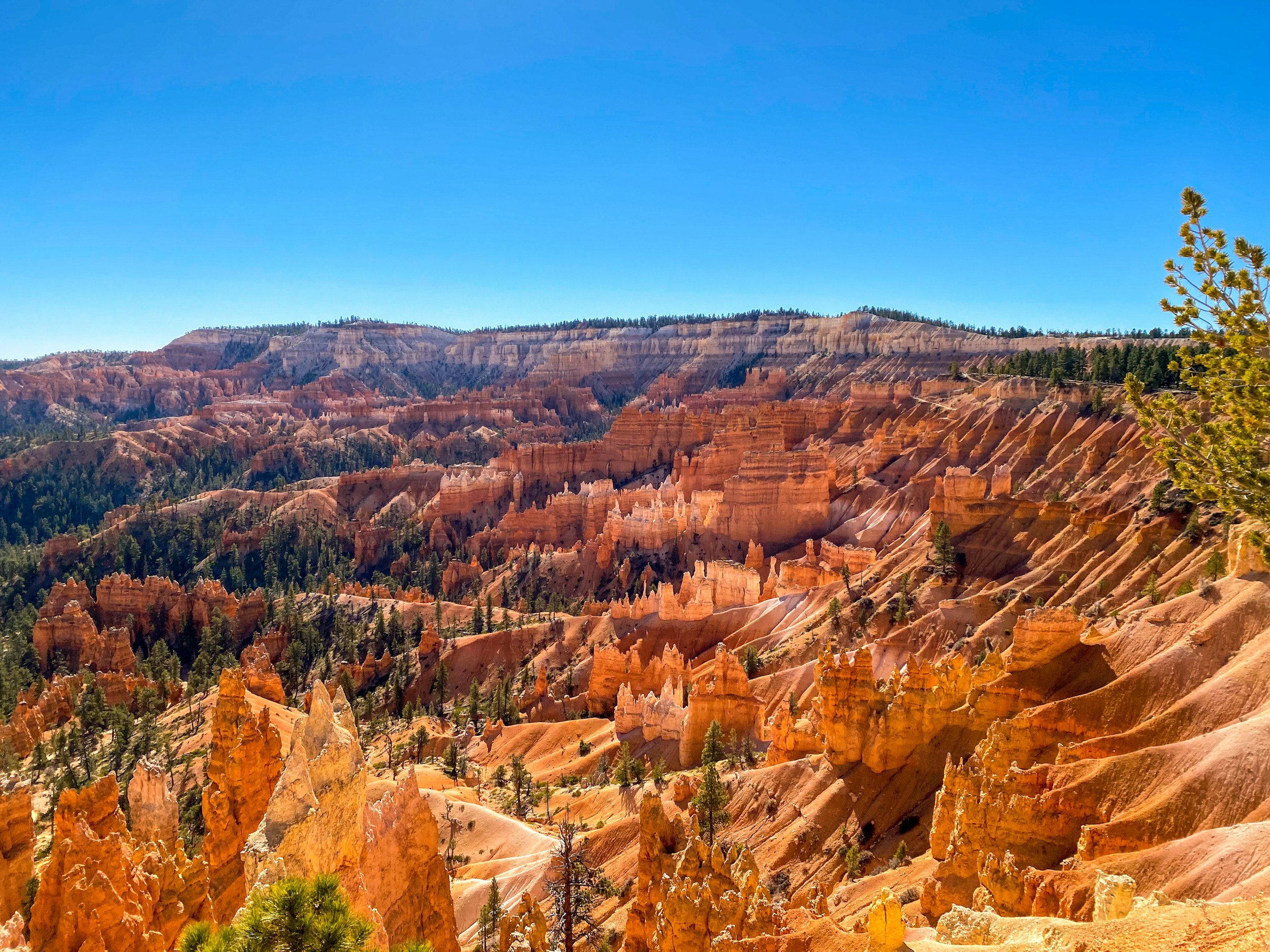
Bryce Canyon National Park, located in southern Utah, is best known for its crimson-colored hoodoos—tall, thin spires of rock formed by millions of years of erosion. Bryce offers one of the most unique and dramatic geological landscapes in the United States - making it an incredible place for hiking and outdoor exploration.
This park is different than the other four in Utah because it is elevated at over 8,000 feet - offering cooler temperatures, stunning stargazing, and vibrant scenery that changes with the seasons. With a relatively compact size and well-developed trail system, it’s one of the most accessible national parks in the country.
As a disclaimer: this blog post may contain affiliate links. This means we get a small commission if you purchase through the links - no extra cost to you! This is one way we can keep producing free guides to help you with your travels!
Park Overview
Bryce Canyon National Park spans over 35,000 acres and ranges in elevation from 6,600 to over 9,100 feet. The park is divided into a few main areas:
Bryce Amphitheater – The iconic zone with the highest concentration of hoodoos.
Southern Scenic Drive – A 17-mile route with pullouts and lesser-known overlooks.
Backcountry Areas – Remote regions for longer hikes and solitude.
Because of its elevation, Bryce is cooler than most other Utah parks and can receive snow in the shoulder seasons.
National Park Entrance Fees
In 2026 - there are new rules for visiting national parks - it is important to note the following:
You must pay a daily entrance fee for a single park or use broader passes.
The most common pass is the America the Beautiful – National Parks and Federal Recreational Lands Pass, which covers entrance or day‑use fees at 2,000+ federal recreation sites (including national parks, monuments, forests, wildlife refuges, BLM lands, etc.). These can be purchased online or at the park entrances.
2026 updates: Starting January 1, 2026, America the Beautiful passes cost $80 for U.S. residents, but non‑U.S. residents pay $250 for an annual pass, and nonresidents without a pass will pay an additional $100 per person surcharge at 11 major parks in addition to regular fees.
How many days should you plan in the park?
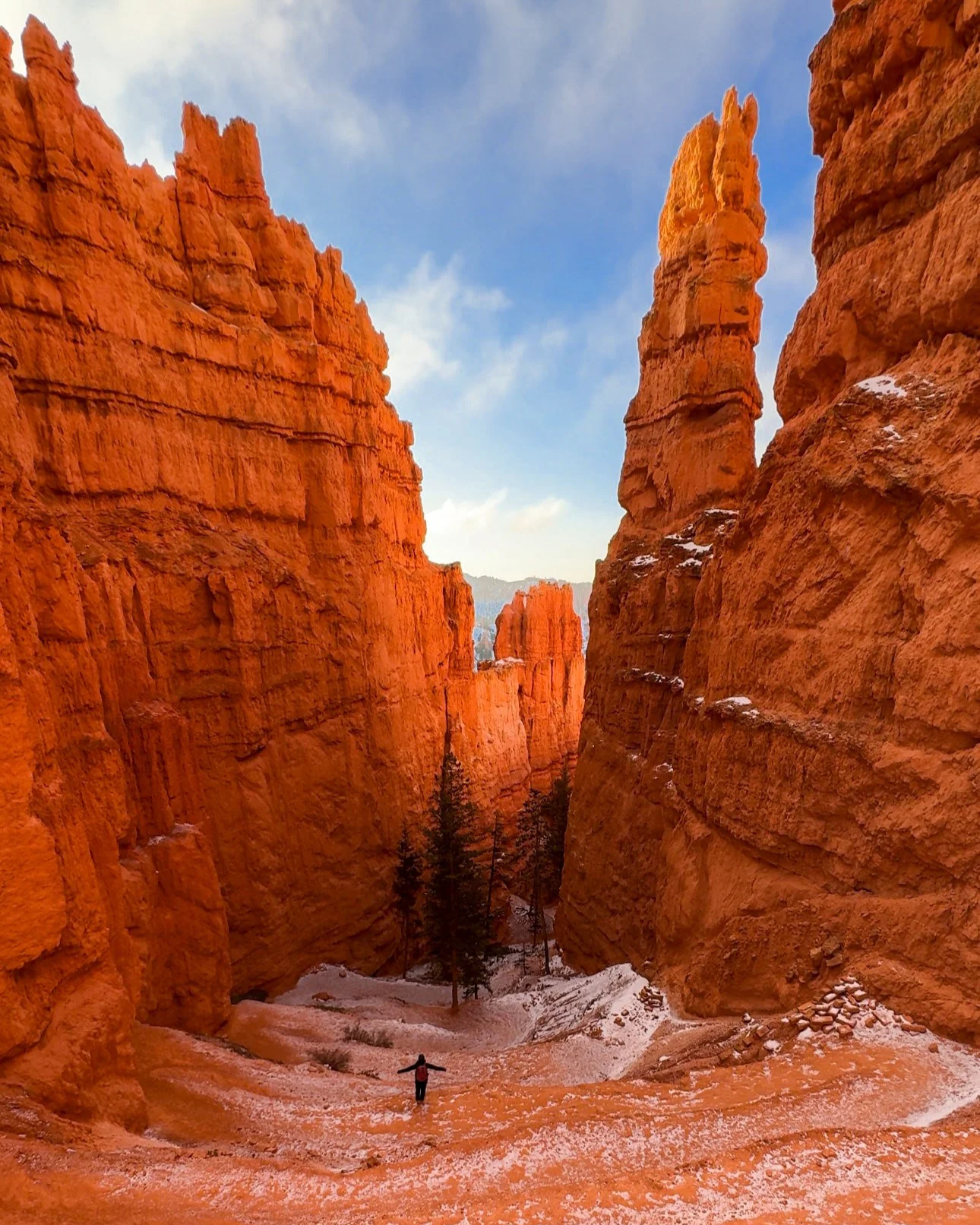
Since Bryce Canyon is on the smaller side of the Utah national parks, you really only need 2-3 days to properly explore it.
Best Scenic Viewpoints
Our favorite thing about Bryce Canyon National Park is that every parking lot view is from above the canyon. If you are not a hiker, this is the best Utah national park for you - there is NO hiking required to see the best viewpoints in the park!
1. Sunrise Point
Great for early morning light on hoodoos.
2. Sunset Point
Iconic views of Thor’s Hammer and glowing red formations. This is another great sunrise viewpoint despite the name - it is less crowded than Sunrise Point.
3. Bryce Point
Breathtaking perspective from high above the amphitheater.
4. Inspiration Point
Layered rock formations stretching for miles; great at dusk.
5. Rainbow & Yovimpa Points
Southern end of the park with sweeping views over Grand Staircase-Escalante.
What is the best time of year to visit?
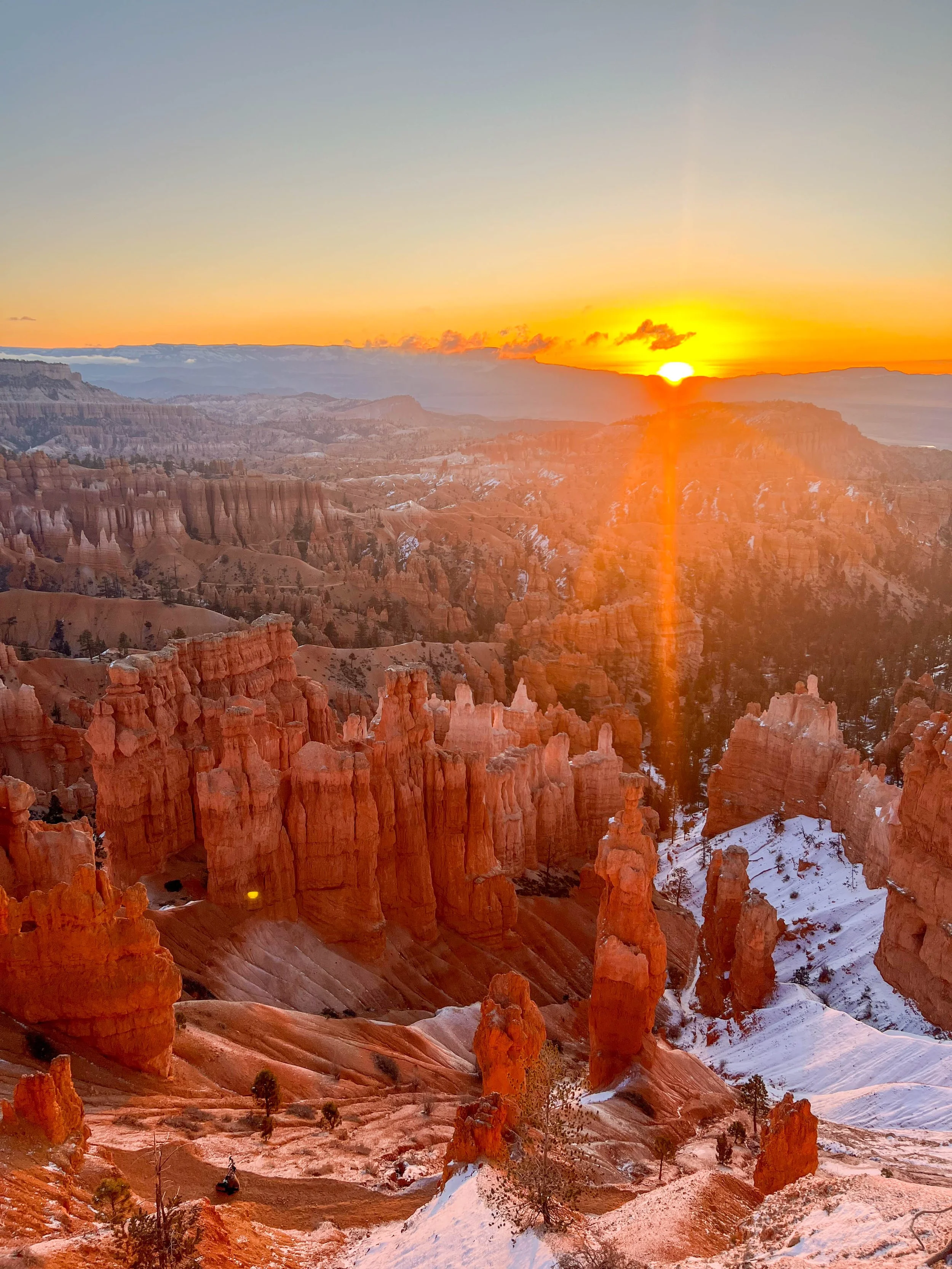
Since Bryce Canyon National Park sits at 8,000 feet or more - this park can see snow from October to May. This photo was taken in April, we hiked in 30 degree temps one day!
For snow-free conditions and sunny weather, opt to visit June-September.
That being said, hiking here with snow is absolutely magical and completely safe with the right gear (*see our microspike note below).
What to Wear in Bryce Canyon National Park
The weather in Bryce Canyon National Park can vary greatly depending on the time of year you visit. In the summer months, temperatures can reach 80 degrees or more and in the winter months, temperatures can drop below freezing and bring icy and snowy conditions.
If you visit in the winter, layers are key:
Waterproof rain shell (pro tip: wear a bright shell, pink or blue, to stand out in photos)
If you visit in the warmer months, sun protection is key:
Other hiking gear you may need includes:
Microspikes (if you visit in the winter) - we hiked here in April and needed microspikes to safely navigate the trails. DO NOT attempt to hike icy trails without these, you will slip and fall and the drop offs are no joke!
Headlamp (for sunrise or sunset hikes)
Top Hiking Recommendations
1. Navajo Loop & Queen’s Garden Trail (the most iconic trail in the park)
Distance: 2.9 miles
Elevation: ~600 ft descent/ascent
Time: 2–3 hours
Difficulty: Moderate
Highlights: Thor’s Hammer, Wall Street (if open), Queen Victoria hoodoo
2. Peekaboo Loop Trail
Distance: 5.5 miles
Elevation: ~1,500 ft
Time: 3–4 hours
Difficulty: Strenuous
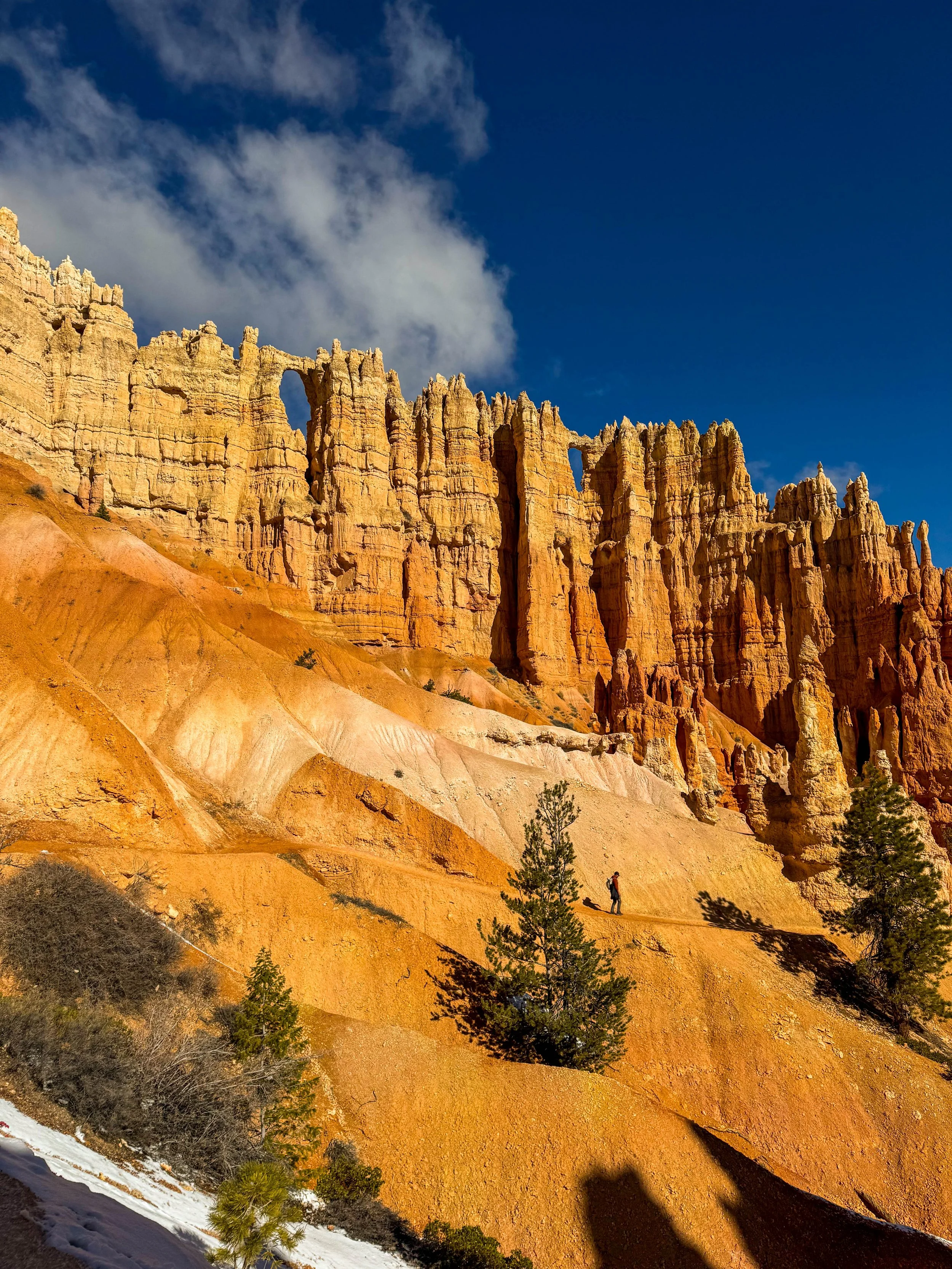
Highlights: Wall of Windows, fewer crowds, fantastic hoodoo formations, connects with other loops
3. Fairyland Loop
Distance: 8 miles
Elevation: ~1,700 ft
Time: 4–5 hours
Difficulty: Strenuous
Highlights: Panoramic views, solitude, less-visited formations
4. Mossy Cave Trail
Distance: 0.8 miles round trip
Difficulty: Easy
Highlights: Waterfall (in spring), mossy alcove, great for families
5. Rim Trail (Partial)
Distance: Variable
Difficulty: Easy to Moderate
Best Section: Sunrise Point to Inspiration Point (~1 mile one-way)
Highlights: Great elevated views of the amphitheater without descending, dog-friendly!
If we could pick ONE hike in Bryce Canyon to recommend…
it would be Peekaboo Loop! This is probably the most difficult hike in the park elevation wise but it allows you to get off the beaten path, get up close to incredible hoodoos, and explore inside the canyon via connecting trails.
Hotel & Lodge Recommendations
Inside the Park
Rustic cabins and motel rooms walking distance to the rim
In Bryce Canyon City (5 mins from entrance)
Best Western Plus Ruby's Inn – Large property with amenities and tour access
Bryce View Lodge – Budget-friendly, good location
Bryce Canyon Grand Hotel – Newer, upscale option
Outside Town (15–30 mins away)
Bryce Canyon Pines Motel – Cozy, quiet, great on-site restaurant
Stone Canyon Inn (Tropic) – Boutique-style lodging with excellent views
Camping Recommendations
1. North Campground
Open Year-Round, close to the Visitor Center
99 sites, some first-come, some reservable
2. Sunset Campground
Seasonal (Spring–Fall), closer to Sunset Point
100+ sites, first-come basis
Tips:
Both campgrounds accommodate tents and RVs.
Arrive early for first-come spots.
Nearby: Bryce Canyon Pines Campground and Ruby’s Inn RV Park for alternatives.
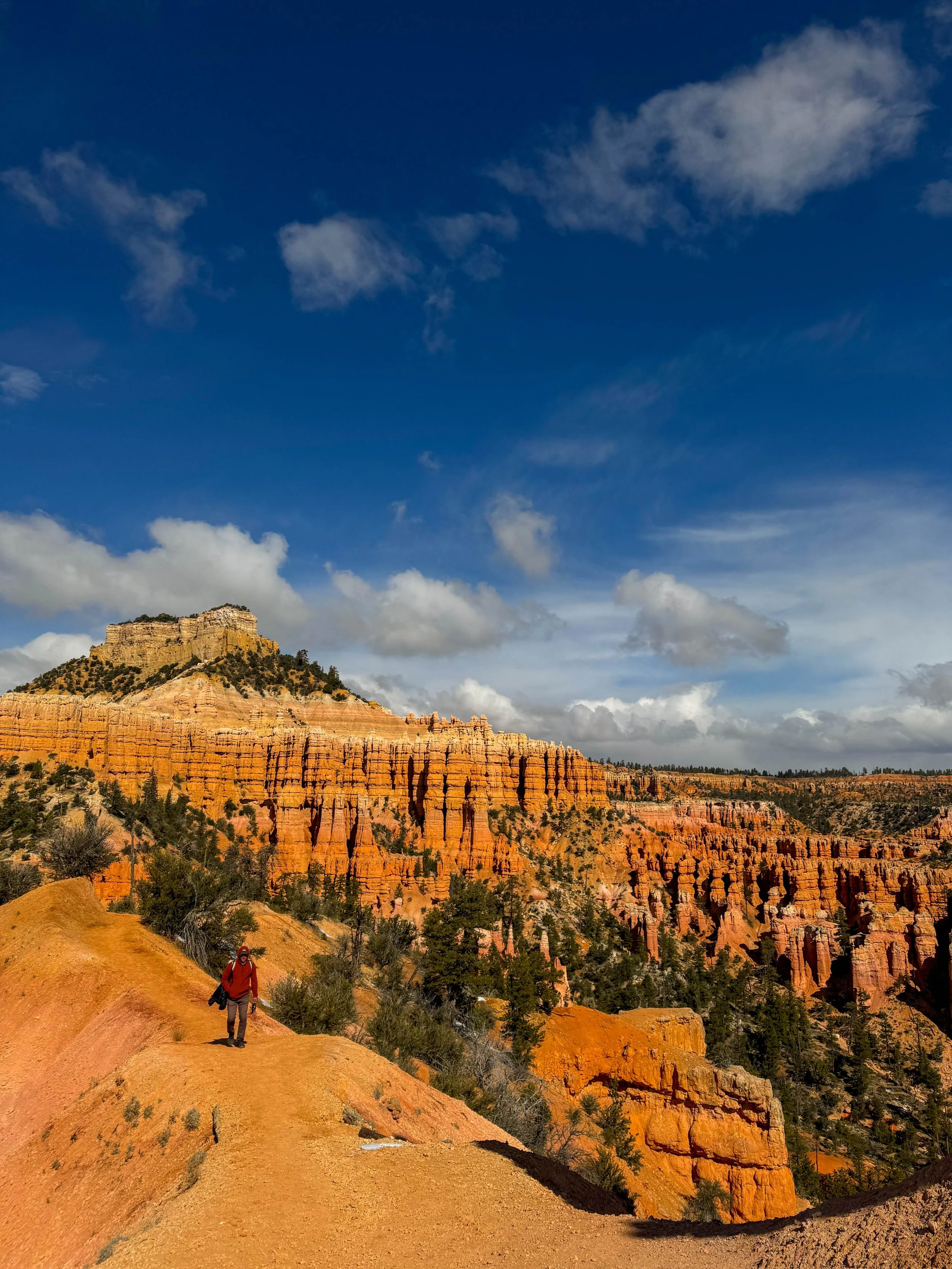
Is there free camping?
There is ALWAYS free camping if you know where to look :)
We use iOverlander to find free campsites - these are always outside of the national park on BLM land but we were able to easily stay 15 minutes outside the park entrance for free.
Dining Options
Inside the Park
The Lodge at Bryce Canyon Restaurant – Open seasonally; traditional fare with great views
In Bryce Canyon City
Ebenezer’s Barn & Grill – Western-themed dinner and live music
Cowboy’s Buffet & Steak Room – Casual buffet with American classics
Bryce Canyon Coffee Co. – Good for breakfast and espresso drinks
Valhalla Pizzeria – Open seasonally near the Lodge
Nearby (Tropic or Panguitch)
Stone Hearth Grille – Fine dining with stunning views (seasonal)
Bryce Canyon Pines Restaurant – Best pies in the area and great local food
Tips for Visiting
Altitude Awareness: The high elevation can affect breathing and cause fatigue—take it slow, hydrate, and rest.
Layer Up: Temperatures can vary greatly between morning and midday—even in summer.
Start Early: Beat the crowds, get a parking space, and enjoy the best lighting.
Stargazing: Don’t miss the night skies—Bryce is a certified Dark Sky Park.
Free Shuttle (Spring–Fall): This is a huge hack for avoiding parking frustrations during the busy months! Leave your car and use the shuttle to explore the main viewpoints and trailheads.
Plan for Cell Service: Limited reception in the park—download maps and info beforehand.
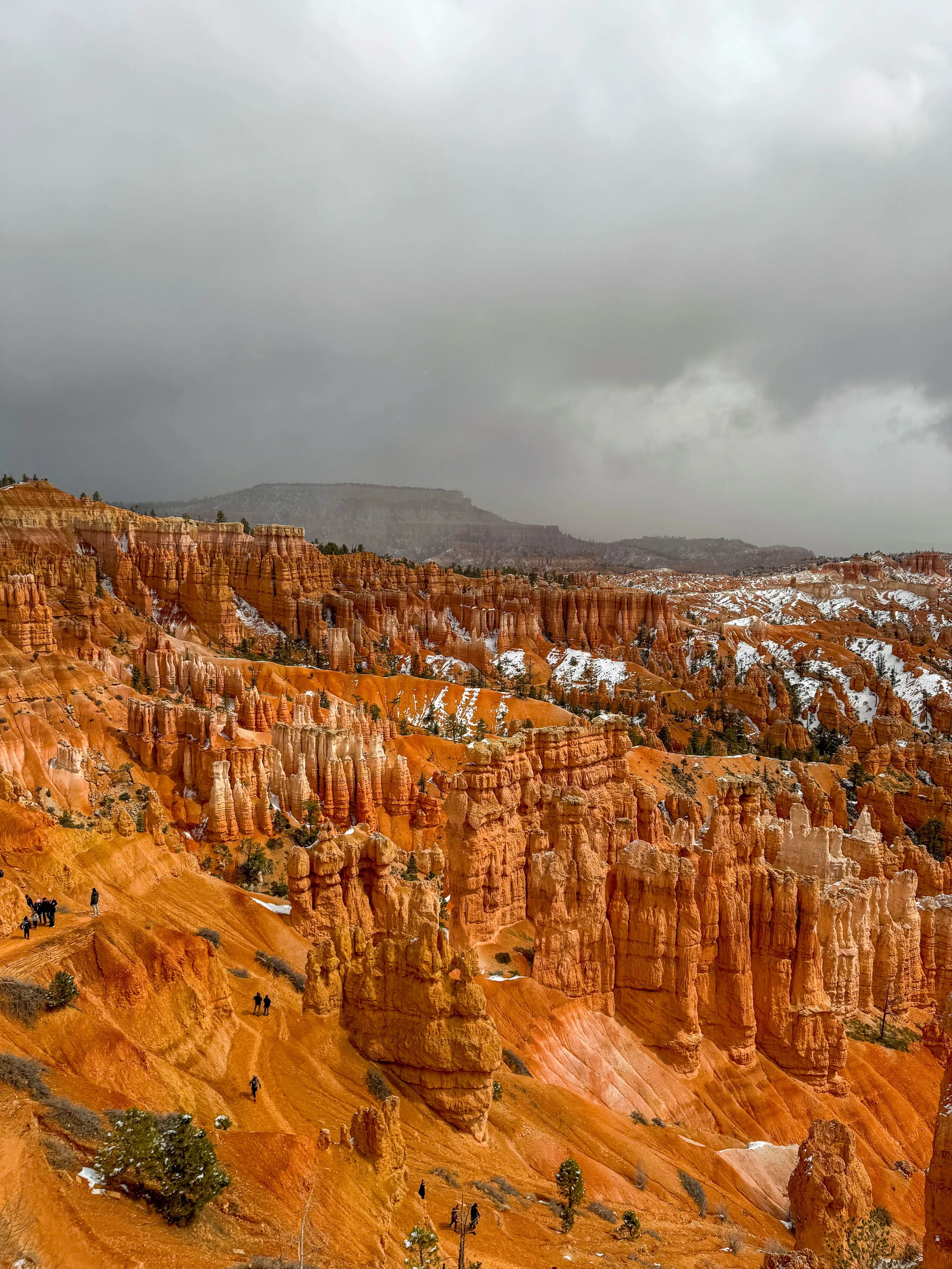
Weather can change quickly in Bryce Canyon!
Since this park sits at a higher elevation, storms can move in rather quickly. Always be prepared with layers, check the weather before hiking, and consider carrying an SOS device for emergencies.
Suggested 48-Hour Itinerary
Day 1: Scenic Overlooks + Short Hikes
Morning:
Arrive and stop by the Visitor Center
Drive the 18-mile scenic road to Rainbow and Yovimpa Points
Work your way back north, stopping at Ponderosa Point, Natural Bridge, and Agua Canyon
Lunch:
Eat at Bryce Canyon Pines or bring a picnic
Afternoon:
Hike Mossy Cave Trail
Enjoy views from Inspiration Point
Evening:
Watch sunset at Sunset Point
Dinner at Ebenezer’s Barn & Grill or Stone Hearth Grille
Optional Night Activity:
Stargazing from Bryce Point or attend a ranger-led program
Day 2: Hiking in the Hoodoos
Sunrise:
Watch the sunrise from SUNSET Point (trust us)
Morning Hike:
Do the Navajo Loop + Queen’s Garden combo
OR, tackle the longer Peekaboo Loop
Lunch:
Return to Ruby’s Inn or a café in town
Afternoon:
Explore the Rim Trail (Sunrise to Inspiration Point)
Optional: Horseback riding tour from Ruby’s Inn
Evening:
Relax with dinner and soak in the final canyon views
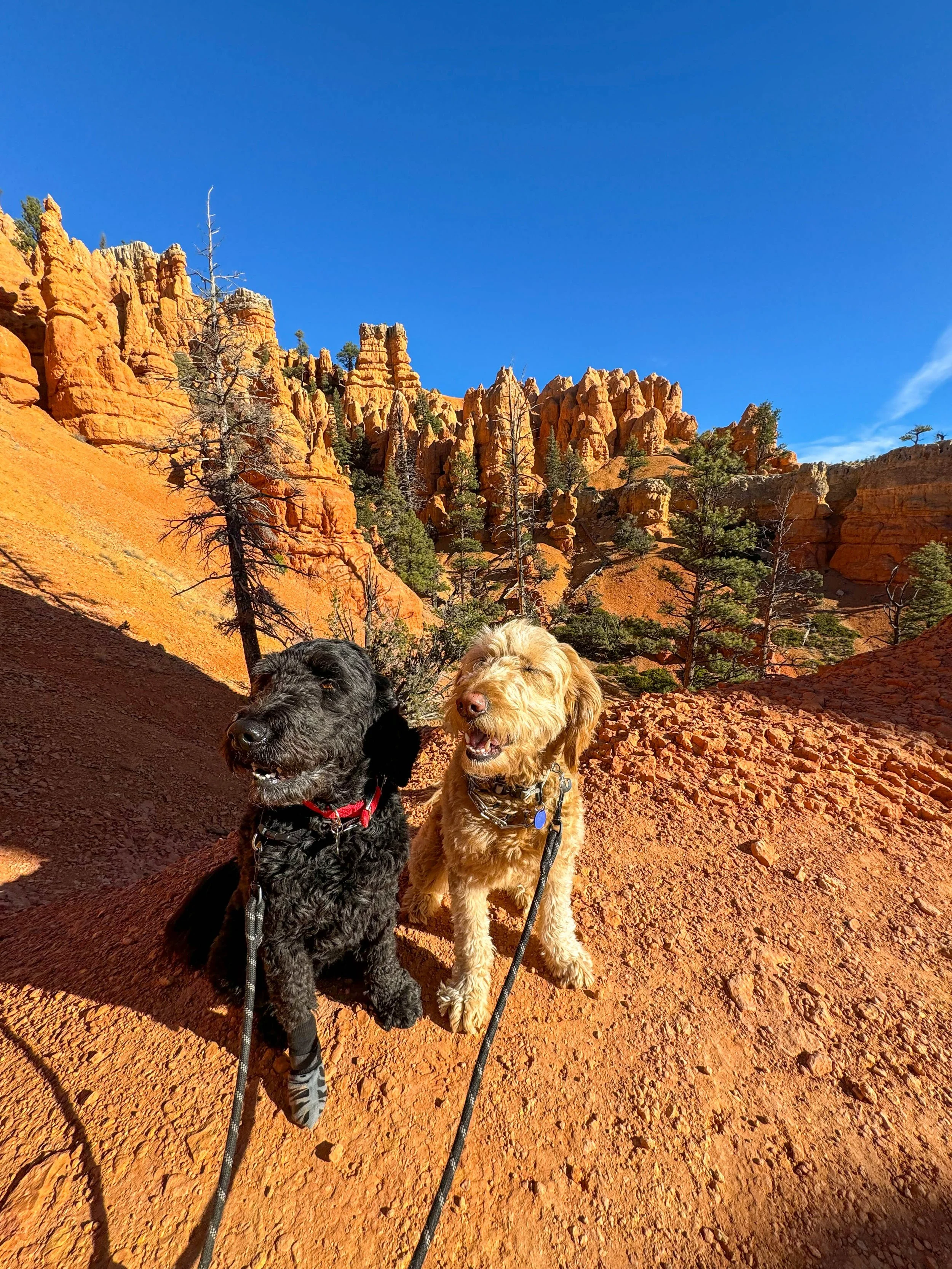
Red Canyon
If you travel with dogs, there is a mini Bryce Canyon that is dog-friendly about 20 minutes outside of the national park! There are a few short trails here that are great to get your pups out and about!
Other Nearby Adventures
• Kodachrome Basin State Park (30 min)
Colorful sandstone spires, quiet hiking trails, great photography, and far fewer crowds than nearby national parks.
• Grand Staircase–Escalante National Monument (45 min–1.5 hrs)
Vast backcountry with slot canyons, waterfalls, slickrock hikes, and remote desert landscapes for adventurous travelers.
• Zion National Park (2–2.5 hrs)
Iconic canyon views, towering cliffs, and famous hikes like The Narrows and Angels Landing (expect crowds).
• Cedar Breaks National Monument (1.5 hrs)
High-elevation amphitheater with Bryce-like scenery, summer wildflowers, cooler temperatures, and fewer visitors.
• Scenic Byway 12 (30 min–full day)
One of the most scenic drives in the U.S., linking Bryce Canyon to Escalante and Capitol Reef with nonstop views.
Final Thoughts
Bryce Canyon National Park is a small but spectacular outdoor destination - there is truly nothing in this world like the vibrant, red hoodoos here! Bryce is a hikers dreamland and offers a magical experience in every season. With thoughtful planning, even a short visit will leave you with a deep appreciation for this one-of-a-kind landscape.
Follow Our Socials: